


Can a single lead break turn a good song into a generational anthem? That question kicks off this practical guide for players and listeners alike, exploring the best guitar solos of all time and what makes them unforgettable.
Great solos do more than show technique: they combine a memorable melody with a distinct sound and deliberate phrasing. In a few bars a solo can tell a tiny story you hum later, shape a record’s identity, and teach players lasting lessons about tone and timing.
This list balances crowd favorites with historically important moments in rock and popular music. Expect lyrical lines, technique-forward passages, and examples where studio craft met live electricity — all chosen so you can listen, learn, and apply the ideas to your own playing.
What you’ll get: short, clear examples that show how phrasing, dynamics, and tone shape a solo’s impact — plus one concrete practice challenge per entry. Whether you’re a beginner building melodic vocabulary or an advanced guitarist refining tone, use each section as a model: pick a phrase, learn it slowly, then make it yours.
What makes a great guitar solo in rock history
Great lead lines in rock usually sing more than they shred: a clear, memorable melody and purposeful phrasing lodge in listeners’ ears long after flashy speed is forgotten. Shape and timing matter more than note count — a simple motif delivered with conviction often outlasts frantic runs.
Melody vs. speed: why singable lines endure
Singable phrases are easy to hum and map to the song’s harmony. Targeted notes, controlled tension-and-release, and phrase contour over the chords create emotional pull. Leave space between phrases; the gaps give the notes weight and let the melody breathe. Example (conceptual): a three-note phrase like root → major 2nd → major 3rd often sounds more memorable than a blurred 16‑note run.
Feel, phrasing, bends, and vibrato
Bends and vibrato act like a voice box: small intonation changes make single tones cry or smile. Much of rock’s lead language borrows from blues call-and-response phrasing — microtonal bends, slides, and short replies to the vocal or rhythm part give the guitar a conversational role.
- Start restrained, build to a peak, then resolve.
- Sing lines before playing to lock down melody and phrasing.
- Transcribe short phrases by ear to capture feel, not just fingerings.
In short: focus first on melody and feel, then add technique. The next section applies these ideas to the first featured solo so you can hear how phrasing shapes impact.
Sweet Child O’ Mine — Guns N’ Roses (Slash’s Les Paul masterclass)
Slash’s lead on this track is a study in pacing: each phrase raises the intensity a little more until the finale, matching the vocal drama and arrangement so the solo feels like a natural climax rather than a display of speed.

How the solo builds tension across sections
The phrasing begins lyrical and conversational, then moves into higher-energy lines. Repeated motifs return as anchors while small melodic and rhythmic variations increase forward motion and emotional lift.
Tone, sustain, and phrasing that define a great performance
Slash favors a mid‑focused Les Paul voice with strong sustain that lets long notes breathe. That sustain makes each bend and vibrato read like a sung inflection, so a single held pitch carries as much meaning as a run of notes.
Album context and live endings that elevate the track
Originally a rehearsal riff that became the band’s signature anthem, the solo adapts well live: players often stretch phrases and add subtle variations to heighten the catharsis before the song’s close.
- Melodic growth: phrase‑by‑phrase escalation from lower positions to soaring high notes.
- Harmonic targets: aim for chord tones at phrase ends to make lines resolve convincingly.
- Practice tip: sing the first 2 bars, play them at 60% tempo, then add steady vibrato on sustained notes. Repeat until intonation and feel match the sung phrase.
- Fret map note: focus on the minor‑pentatonic box around the 12th fret for the climactic phrases, but trace chord tones back to the lower positions to hear the melodic shape.
Stairway to Heaven — Led Zeppelin (Jimmy Page’s double‑neck epic)
Jimmy Page shapes a single thread from fingerpicked hush into a stadium‑filling lead that still stops listeners in their tracks.

The arrangement moves from delicate, fingerpicked verses into a powerful, melodic lead that becomes the song’s emotional summit. Targeted melody notes trace the harmony, so each phrase sounds deliberate rather than a run for speed.
From gentle melody to soaring lead
Dynamics and articulation carry the arc: soft attack and space at first, then stronger bends and controlled vibrato as intensity rises. The climb is paced so the solo feels earned — each phrase increases tension and resolves on chord tones that make the melody land naturally.
Why players study this passage
This passage has taught generations of guitarists. The writing emphasizes melodic target notes over flashy runs, making it a go‑to study for learning how to craft singable solos that fit an arrangement.
- Practice tip: work the first four bars slowly — sing the phrase, play it at 60% tempo, then add vibrato on sustained notes to match the vocal shape.
- Target notes example: in the climactic phrase, aim to resolve on the chord’s 3rd or 5th (these chord tones give a strong sense of arrival).
- Band role: subtle rhythm dynamics and space from the band let the lead breathe as it ascends.
- Study approach: learn the written lines, then improvise within the same melodic logic to absorb Page’s phrasing and timing.
All Along the Watchtower — Jimi Hendrix (shape‑shifting lead work)
With this cover, Hendrix treated the electric lead as a narrator, reshaping tone and phrasing to tell a new story. He turned short fills and breaks into a continuous, expressive voice that answers and elevates the vocal line.

Layered phrasing, blues touch, and tonal shifts
Hendrix stacks lines so the arrangement feels like a conversation: multi‑layered leads, sliding double‑stops, and carefully placed fills create tension and release across the verse cycles.
Blues phrasing and microtonal bends add human inflection — tiny pitch slides (often a quarter‑tone approach before the target) and subtle releases make single notes sing with vocal expression.
- Multi‑layer narrative: link short fills into longer phrases so the guitar feels like a responding voice rather than isolated licks.
- Tonal variety: change pickup, attack, and gain from phrase to phrase to keep repeated motifs fresh.
- Rhythmic craft: use syncopation and small displacements to add motion without increasing tempo.
- Practice tip (double‑stops): pick a two‑note double‑stop on adjacent strings, play it as quarter‑note pulses, then add a tiny pre‑bend on the top string — start at 50% tempo and focus on clean fretting and consistent timing.
Hendrix’s approach here influenced generations of guitarists looking for expressive color beyond standard pentatonic runs. His work on Watchtower shows how tone, touch, and micro‑pitch control let a lead guitar rewrite a cover into its own dramatic statement.
Bohemian Rhapsody — Queen (Brian May’s singing lead with a sixpence)
In this track, the lead functions less as a flashy solo and more as a lyrical narrator that binds the song’s shifting sections together.
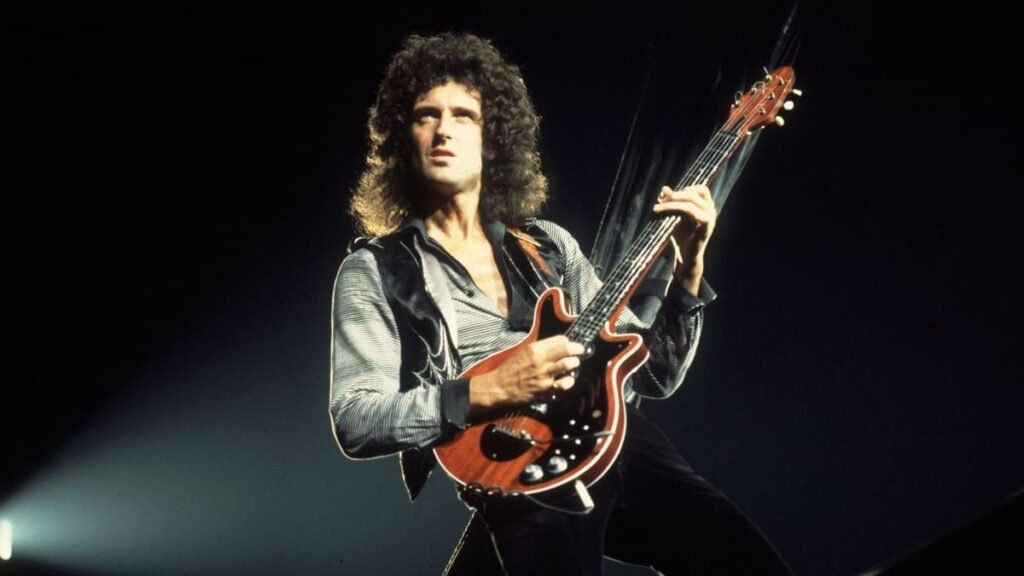
Arranging a vocal-quality melody on lead
Brian May crafts compact, instantly singable melody lines that mirror the vocal phrasing. He treats each phrase like a sung sentence — leave space, shape the attack, and target memorable tones so every note reads like part of the song’s story.
How May’s tone sounds like a choir of guitars
The sixpence pick adds a focused attack and articulate sustain; combined with midrange emphasis and modest gain, this keeps stacked harmonies clear rather than muddy. May’s layering creates the impression of multiple voices — a small guitar choir — rather than a single lead instrument.
- Stacked strings: overdubbed takes and tight intonation give an orchestral, ensemble feel to short melodic phrases.
- Tone tips: boost mids slightly, keep gain controlled, add a touch of delay for depth, and use a firm attack (a thin pick or sixpence) to enhance note definition.
- Practice: sing the line first, map the positions on the neck, then lock vibrato and intonation on sustained notes.
- Harmony interval: May often uses thirds and sixths in his harmonies — practice the melody in unison, then add a third above to hear the “choir” effect.
The concise solo here serves as a thematic statement: clear, melodic, and perfectly placed. In performance May balances precision with energy so the melodic intent remains front and center, showing how tone and arrangement can make a short lead unforgettable.
Hotel California — Eagles (iconic dual‑lead finale)
The Eagles’ finale turns two interlocking lines into a cinematic exit that unfolds over several minutes. The track’s closing section is famous for harmonized parts that climb, answer, and finally resolve in a way that feels both inevitable and expansive.

Harmonized phrases and voice‑leading
Harmonized lines create a wide, orchestral feel while keeping each part distinct. Careful voice leading and interval choices (commonly thirds and sixths) make the interweaving parts feel necessary rather than decorative. Phrases often land on strong chord tones so each lick resolves naturally into the harmony.
Tone, phrasing, and practice
Tone blending is key: match pick attack, amp voicing, and sustain so the two lead voices complement each other rather than compete. In the mix, register separation — one part sitting slightly higher — helps clarity and gives the outro its roomy, cinematic quality.
- Anchor notes: aim for chord tones at phrase ends to make lines feel grounded and conclusive.
- Practice split: Player A: part 1 (lower harmony); Player B: part 2 (upper harmony). Learn each part alone, then play together at 50% tempo before increasing speed.
- Tempo plan: 50% = accuracy → 75% = groove → 100% = performance. Focus first on tight timing, then on matching vibrato and sustain.
- Restraint: use space and repetition — breathing between phrases amplifies melodic lift toward the end.
Practice tip: work unison lines, then thirds, then full harmonies slowly; tighten timing until the pair breathes as one. That calibration is what turns the outro into a signature moment for the band, not just a display of technique.
November Rain — Guns N’ Roses (soaring lyrical solos)
November Rain unfolds like a film score, giving each lead passage room to breathe and develop across the song’s sweeping arrangement.

The song contains multiple solo sections that expand the emotional arc without simply repeating the same idea. Each passage develops the core melody, adding new phrasing, register, or ornamentation so the listener perceives growth across the track’s several minutes.
Long‑note control and sustained tone let the lead float above piano and orchestral strings. Precise vibrato and held notes sit over a gentle band bed so every bend and release reads like a sentence in a larger statement rather than a disconnected flourish.
The arrangement and deliberate tempo invite expressive bends and clear melodic contour. Slower pacing gives space for phrasing, letting players shape lines that rise and fall with the vocal dynamics and full‑band support.
- Practice tip: isolate vibrato on sustained tones — hold a note for 4 beats, add slow vibrato for 2 beats, then release; repeat to build control and endurance.
- Work solo sections separately, then study how the thematic callbacks connect them into one continuous narrative.
- Focus on sustain and intonation so the lead remains lyrical against piano and strings; small pitch adjustments matter more than speed.
Highway Star — Deep Purple (proto‑metal arpeggios and raw drive)
“Highway Star” channels a proto‑metal ferocity where concise, classically influenced runs meet high‑energy rock phrasing. The solo’s mix of rapid alternate‑picked arpeggios, bent tones, and improvised flourishes made it a template for guitarists chasing speed with melodic intent.

Recorded on Deep Purple’s Machine Head era material (early 1970s), the track pairs raucous organ stabs with a focused guitar voice. Ritchie Blackmore blends baroque‑tinged scalar runs and descending arpeggios with aggressive picking to create a solo that sounds both composed and spontaneous.
What to study
- Arpeggio runs: map the key arpeggio shapes used in the main phrases (practice them across three positions to connect neck areas).
- Alternate picking/tremolo: tight alternate picking and controlled tremolo picking give the runs their machine‑gun clarity — practice with a metronome, building speed in 5% increments.
- Melodic targets: aim for chord tones at phrase endings so the high-speed runs still resolve melodically rather than sounding aimless.
- Dynamic contrasts: mix fast runs with held, bent notes to give the solo breathing points and vocal quality.
Practice tips: isolate an 8‑bar arpeggio phrase, play it at 60% tempo for accuracy, then increase to 80% and finally 100%. Use strict alternate picking and mute unused strings to preserve clarity as speed increases. Focus on connecting the arpeggios to nearby scale fragments so your runs sound like musical sentences, not just technical displays.
Over the years this solo influenced generations of guitarists who wanted speed without sacrificing melodic sense — a key reason “Highway Star” remains a touchstone in rock and early metal history.
Comfortably Numb — Pink Floyd (David Gilmour’s soaring, vocal solo)
David Gilmour’s work on “Comfortably Numb” is a masterclass in making the guitar sing: the song contains two distinct solos, and the late‑song climax — patient, lyrical, and sustained — is the one most guitarists study and admire.

Two solos, two functions
The earlier solo serves the song’s narrative with shorter, restrained phrases that sit close to the vocal melody. The second solo — longer and more expansive — uses wide bends, long sustain, and carefully placed vibrato to create an aching, vocal quality that resolves over the underlying chord progression.
Tone, gear, and phrasing that make notes breathe
Gilmour’s typical setup—Strat‑style guitar, warm amp voicing, moderate overdrive, and tasteful use of delay and reverb—prioritizes sustain and clarity. His touch (a rounded pick attack, relaxed fretting) plus a little compression and delay help each note bloom so phrases sound like sung lines rather than flurries of notes.
- Sound tips: set moderate gain, boost mids slightly, add one quarter‑note delay with a few repeats, and use reverb for space; this helps sustain without smearing articulation.
- Vibrato and bends: long, controlled vibrato and accurate half‑step/whole‑step bends give the solo its crying quality — focus on pitch targets, not speed.
- Timing: phrase across the bar lines — let notes overlap the rhythm to create that effortless sense of forward motion.
Practice drills: work long‑note control by holding a target note for 8 beats, adding slow vibrato on beats 5–8; then practice a 4‑bar phrase at 60% tempo, increasing to 85% only after intonation and vibrato feel secure. Map the solo to the chord changes (the song’s harmonic movement underpins each melodic choice) so your phrases resolve on strong chord tones.
Recorded for The Wall (1979) and refined in many live performances, this solo remains a touchstone for any guitarist seeking expressive, lyrical playing that lasts across minutes and connects directly to the song’s emotional core. Study it for sustain, phrasing, and the art of making a guitar truly sing.
Eruption — Van Halen (Eddie Van Halen redefines technique)
“Eruption” is a short, explosive study in technique that rewired how guitarists used both hands on the neck. A roughly 100‑second tour‑de‑force, the piece compresses two‑handed tapping, rapid picked runs, and dramatic whammy dives into an unforgettable statement that appeared on Van Halen’s debut album and changed modern rock playing.
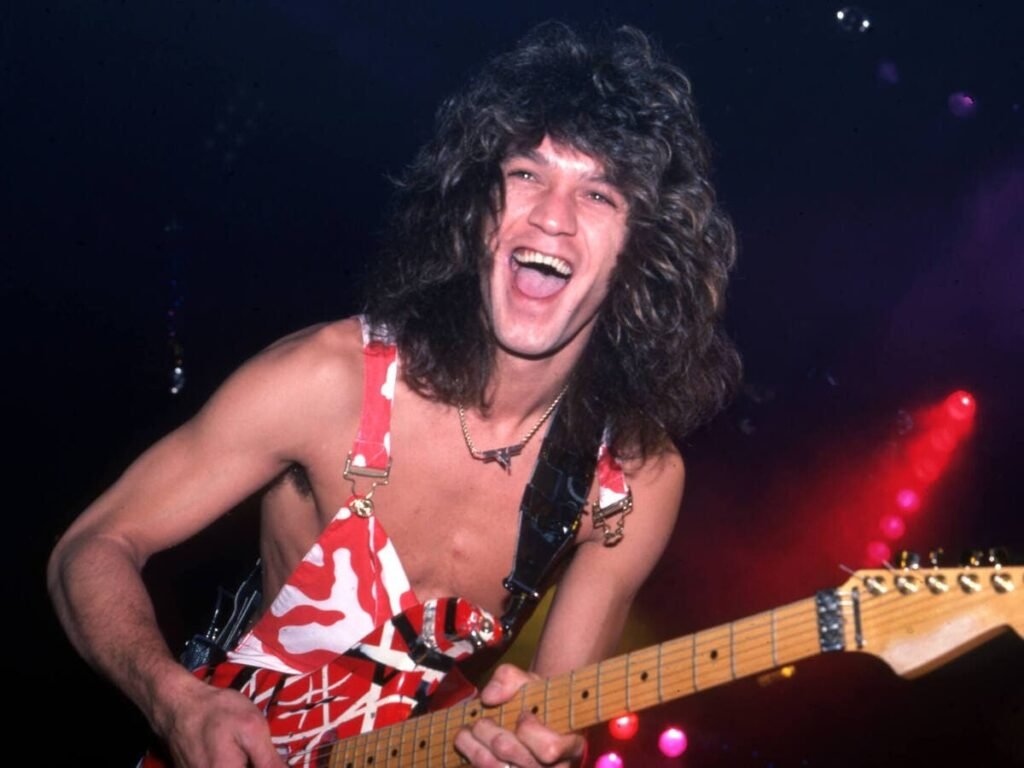
Why it mattered: “Eruption” popularized right‑hand tapping and made advanced fretboard techniques audible over high‑gain tones. Eddie Van Halen’s combination of head‑turning technique and clear note articulation prompted players to rethink left/right roles and the very layout of solo vocabulary.
- Two‑hand tapping: right‑hand finger placement shapes articulation and sustain; keep fingers relaxed and use legato motion so notes sing clearly.
- Tremolo and dive‑bombs: fast picked runs and controlled whammy dives add rhythmic punctuation and dramatic pitch motion — practice controlled return to pitch after each dive.
- Frankenstrat setup: a hot‑rodded pickup, low action, and high‑gain clarity helped Eddie make tapping and fast figures audible through distortion.
- Compact arc: intro, development, and a breathtaking climax fit into about one minute and forty seconds, making the piece concise and iconic.
- Practice tips: start with a one‑bar tapping pattern at 60 BPM (tap on beat 1, hammer on a note with left hand, then release), mute unused strings, and increase tempo in 5–10% steps. Record takes to check timing and string noise.
Impact in short order: Eddie Van Halen and Van Halen inspired a generation; Eddie’s approach changed how players approached the neck, the guitar, and modern solo technique. Make sure to capitalize his name correctly (Eddie Van Halen) when referencing his work, and link mentions of Eddie in the honorable‑mentions so readers can follow the influence trail.
Best guitar solos of all time: essential honorable mentions
These honorable mentions highlight additional tracks that widened the palette for lead playing across genres. Each entry shows a different way a lead can serve a song — from endurance and interplay to restrained emotion and novel sound design.
Free Bird — Lynyrd Skynyrd
Free Bird — endurance and interplay. The multi‑guitar finale (often running five minutes or more in live versions) is a benchmark for stamina, tight motifs, and trading solos that build to catharsis. Study it for long-form solo structure and ensemble timing.
While My Guitar Gently Weeps — The Beatles feat. Eric Clapton
While My Guitar Gently Weeps — tasteful restraint. Eric Clapton’s contribution favors melodic minimalism: well‑placed bends and a vocal approach that demonstrates how less can carry more emotional weight.
Shine On You Crazy Diamond — Pink Floyd
Shine On You Crazy Diamond — space and tone. David Gilmour’s slow‑burn melodies are a masterclass in sustain and phrasing across long stretches, proving how patient lines can create a vast emotional arc.
Beat It — Michael Jackson
Beat It — crossover impact. Featuring Eddie Van Halen, this track brought virtuosic hard‑rock lead playing into mainstream pop; Eddie’s concise, fiery statements show how a short, well‑placed solo can leave a massive impression.
Killing in the Name — Rage Against the Machine
Killing in the Name — inventive textures. Tom Morello uses whammy tricks and unconventional techniques to turn the solo into a set of noisescapes, expanding what an electric lead can sound like while serving the song’s raw energy.
Other picks worth exploring
Each of these passages taught guitarists different lessons — technique, tone, or ensemble craft — and they circulated through records and live shows to influence players around the world.
- Free Bird — endurance/interplay (stamina, motif development).
- While My Guitar Gently Weeps — restraint/emotion (melodic focus, subtle bends).
- Shine On You Crazy Diamond — sustain/space (long phrases, tone control).
- Beat It — concise impact (pop crossover, concise virtuosity).
- Killing in the Name — sound design (effects, unconventional approach).
How to use these: pick one honorable mention that challenges a skill you want to build (endurance, tone, restraint, or creativity), find a timestamp or tab, and work the core phrase slowly with a metronome. These tracks and their solos act as companions to the main list — each shaped albums and live performance practices and helped define the great guitar moments we still study today.
Signature techniques behind iconic solos
Many legendary breaks rely on a handful of core techniques that shape tone and phrasing more than sheer speed. These methods help single lines feel vocal and intentional — the kind of notes listeners remember.

Bends, vibrato, and sustain: making notes sing
Controlled bends and steady vibrato give single notes a singing quality. Push to the target pitch, then hold the note long enough to add a measured wobble so the tone sounds human, not mechanical. Sustain ties phrases together and lets long tones breathe over the band.
- Vibrato width drill: hold a note for 2 beats, add three slow vibrato pulses, then two faster pulses; repeat to build control.
- Bend accuracy drill: mark the target pitch, bend slowly to it, hold for one beat, and release — use a tuner to check pitch when practicing.
Double‑stops, harmonized leads, and unison bends
Double‑stops and harmonized lines depend on clean fretting across adjacent strings and matched attack. When two players (or overdubs) play together, match pick attack and vibrato speed to blend parts; unison bends require both players to hit the exact pitch target for the phrase to lock.
Example combo: play a harmonized double‑stop, then release the top voice into a bend while the lower voice sustains — this pairs harmonic weight with vocal inflection.
Tapping, slides, and whammy pedal antics
Two‑hand tapping needs a relaxed right hand, precise fingering, and careful muting to stay clear at speed. Slides and position shifts act as glue between phrases; use them to move the melody smoothly across the neck.
Reserve whammy bar or pedal moves for texture — controlled dives, pitch sweeps, and subtle detuning add character, but overuse can turn an expressive device into a crutch. Isolate one technique per practice session to build muscle memory and musical application.
- Tapping micro‑exercise: 1‑bar pattern at 60 BPM: tap on beat 1, hammer on on beat 2, pull‑off on beat 3, rest on beat 4. Increase tempo in 5% steps.
- Combine techniques: try a slide into a held note, then add vibrato and a slight bend for a vocal effect.
- Recording tip: record short takes to assess string noise, bend intonation, and vibrato consistency in context.
The gear that shaped these sounds: Les Pauls, Strats, and beyond
Tone choices and instrument setup often decide whether a lead line cuts through or melts into the mix. Classic recordings balance instrument choice, amp voicing, and subtle effects so a solo reads clearly and emotionally.

Les Paul punch vs. Strat sparkle in classic recordings
A Les Paul’s thick mids and long sustain suit lyrical leads and big single‑note lines — the extra mid presence helps long notes breathe and sit above a dense band mix. For players chasing that voice, a humbucker with slightly scooped treble and boosted mids is a reliable starting point.
By contrast, a Strat brings articulate attack and airy highs that make fast runs and single‑note clarity pop in a mix. Single‑coil clarity and a slightly brighter EQ let individual notes cut through without losing transient detail.
Amps, effects, and strings that color a solo’s tone
Pickups, scale length, and bridge design change feel under the fingers and the resulting sound. The Frankenstrat setup helped Eddie Van Halen get high‑gain clarity for tapping, while Brian May’s sixpence attack and specific voicing gave Queen its signature sheen.
- Amp & EQ starter settings: Les Paul sustain voice — set amp gain moderate, bass 4–5, mids 6–7, treble 3–4 (on a 1–10 knob); add light compression and plate reverb. Strat clarity voice — gain lower, bass 3–4, mids 4–5, treble 6–7; short delay and slapback can thicken runs without masking attack.
- Strings & setup: for bending and sustain try .010–.046 gauge for electric guitar players who want balance between bendability and body; lower action (1.8–2.4 mm at 12th fret) helps fast runs but watch intonation. Heavier gauges increase sustain but require stronger fingers for wide bends.
- Effects: delay (quarter or dotted‑quarter repeats), tasteful reverb, and subtle chorus add space; avoid long, dense reverbs for busy fast runs or they’ll blur articulation.
- Tracking & overdubs: double‑tracking or harmonized overdubs widen a solo; pan takes to create the impression of an ensemble lead.
From studio to stage: performances that redefined the songs
On stage, short studio lines often evolve into extended conversations between players and the crowd. Live settings let phrases expand and breathe, turning a compact break into a narrative that grows with each repeat and responds to the room.
Woodstock’s “Soul Sacrifice” and extended live endings
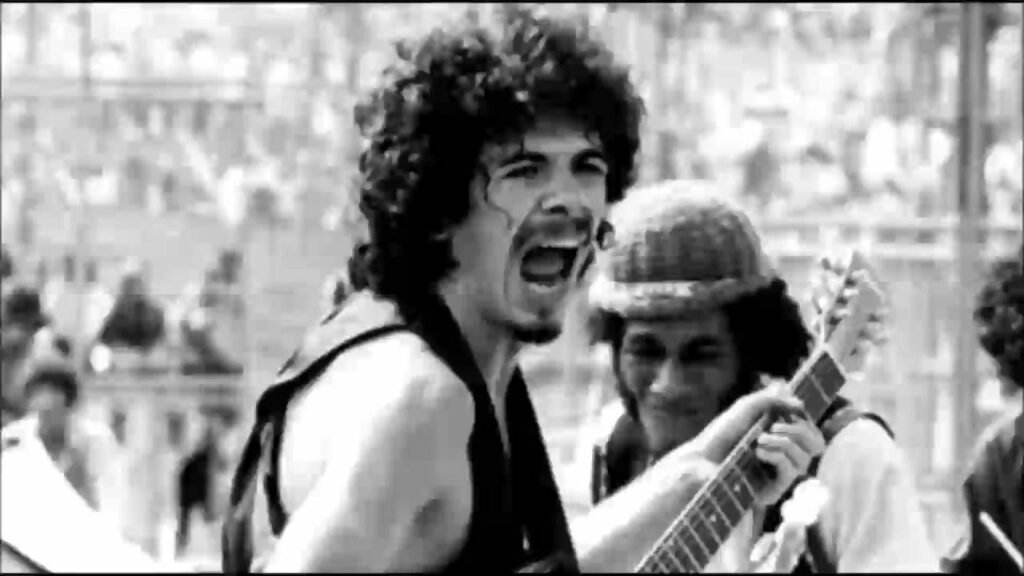
Santana’s Woodstock performance transformed the recorded song into a continuous, percussive exploration. The lead is present throughout and trades phrases with congas and drums, so solo material becomes part of a larger ensemble conversation rather than a discrete break.
That night the group stretched sections by several minutes, letting motifs return and bloom; the result was a dramatic, open‑ended performance that reshaped expectations for live interpretation and showed how a few studio bars can become an elastic stage moment.
How live covers and times/tempo shifts alter a solo’s impact
Bands often push or pull the beat to raise energy or create tension. Small time or tempo shifts change the emotional weight of familiar lines; stretching an ending by a few bars or switching feel can reframe a phrase and lift the crowd.
- Transform concise parts: develop motifs into long arcs that tell a story rather than a single trick.
- Agree on cues: the band should lock signals for the end to avoid chaos onstage — eye contact, nods, or a rhythmic fill work well.
- Listen and adapt: let room acoustics and audience reaction shape phrasing and spotlight moments.
Rehearsal drill: loop a 4‑bar solo section, then practice extending it by 2 bars each pass — first add a held note, then a short call‑and‑response with the rhythm part; practice agreed cues for the final cadence. This builds stamina and group timing so the live expansion feels purposeful.
Good live work keeps the lead voice alive, turning recorded lines into memorable stage statements that highlight how a guitar can narrate a song and how players reshape material over times and performances. Those shifts often turn studio breaks into legendary solos.
Learning these solos: practice tips for players at different levels
A smart practice plan blends ear training, phrase work, and time‑boxed reps so progress is steady and musical.
Transcribing by ear vs. tabs and notation
Listen and sing short phrases first to lock contour and timing into your head — ear transcription captures tiny pitch shifts, rhythmic micro‑placements, and expressive bends that tabs often miss. Use tabs or notation to confirm fingerings or dense passages, but rely on your ear to catch feel and nuance.
Two quick ear drills: 1) Hum a 2‑bar phrase and then play the root → 3rd → 5th shape that fits it; 2) Play a short phrase, mute the guitar, sing the phrase and identify the underlying chord change by ear.
Breaking parts into phrases and chords
Divide a solo into 2–4 bar chunks. Master the target notes, bends, and vibrato in each chunk before linking them. Always map phrases to the underlying chord so you understand why certain notes land — that knowledge makes transitions feel musical rather than mechanical.
- Practice routine (beginner, 20 min): 5 min ear warm‑up (sing phrases), 10 min chunk work at 60% tempo, 5 min slow play‑through with metronome.
- Practice routine (intermediate, 30 min): 5 min technical warm‑up, 15 min phrase linking (60→80→100% increments), 10 min recording and review.
- Practice routine (advanced, 40 min): 10 min targeted technique (bends/vibrato/tapping), 20 min tempo‑work and phrasing, 10 min improvisation applying learned motifs.
- Record takes: listen back for bend intonation, vibrato width, and rhythmic accuracy — listening is where most improvements are discovered.
- Build phrases: link chunks smoothly until the whole line clicks in musical time; practice breathing between phrases as if the guitar line were a sung sentence.
Focus sessions on one clear goal (intonation, timing, or tone) and keep reps short and deliberate. For players of all levels, rotating between ear work, chunk mastery, and slow‑to‑fast tempo practice yields the best musical results.
How these solos influenced bands, albums, and the wider music world
Landmark passages like Eruption, Stairway to Heaven, and Watchtower changed how players thought about tone, phrasing, and technique. Over the years, those moments moved from isolated feats into a shared vocabulary that shaped records, live work, and the expectations listeners have for a great guitar statement.
Shaping rock, blues, and modern guitarists’ lead vocabulary
Signature techniques — two‑hand tapping, vocal bends, harmonized leads — migrated into mainstream rock and blues. Musicians borrowed motifs, reworked them, and adapted them across genres so a single idea could appear in multiple contexts and sound fresh each time.
- Albums adopted these ideas to craft a band’s lead identity and sonic brand, using solos as focal points that define a record’s character.
- Studios treated certain solos as benchmarks for tone and performance in sessions and auditions around the world.
- Advances in gear and recording — from amp voicing to multitrack overdubs — built on earlier breakthroughs, widening expressive options for later players.
Quick timeline (technique migration):
- 1950s — Chuck Berry: concise riff‑based leads that codified early rock phrasing.
- 1960s — Hendrix/Page: tone, feel, and studio experimentation expanded expressive vocabulary.
- 1970s–80s — Gilmour/Blackmore/Van Halen: sustain, harmonized overdubs, and tapping redefined melodic and technical approaches.
For players and listeners, connecting historical influence to modern interpretation helps bands create work that sounds rooted yet new. Study the lineage, pick one technique from a decade that appeals to you, and apply it in songwriting or soloing to make music that honors the past while pushing your own work forward.
Conclusion
Iconic breaks prove that phrasing, not fireworks, makes a line stick in listeners’ minds.
From Page’s Stairway to Heaven and Hendrix’s All Along the Watchtower to Brian May’s work on Bohemian Rhapsody and Eddie Van Halen’s Eruption, these passages distill decades of innovation into memorable statements that shaped the way guitarists think about melody and tone.
Melody, tone, and structure matter more than sheer speed. A Les Paul voice can help sustain notes, but the player’s touch and phrasing give each guitar solo its identity — the same few notes played with different intent produce very different results.
Listen with fresh ears: map a solo’s form, spot its target notes, and trace the dynamic arcs that make phrases breathe. Learn one solo deeply, then apply its ideas to your own songwriting and improvisation to make the vocabulary your own.
Next step: pick one solo from this list and learn the first four bars this week — slow it down, sing the phrase, and match your vibrato and timing to the recording. Small, focused practice yields the biggest musical gains.





[…] Choosing the “high-strung” tuning was not merely a technical decision, but also an artistic one. Gilmour explained that this tuning allowed him to explore new sonic possibilities, contributing significantly to the creation of one of the most emblematic songs by Pink Floyd. […]
[…] Regarded as one of the greatest guitar solos of all time, “Eruption” stands as a landmark in rock history. Wolfgang characterizes the technique employed by his father as a direct execution, with the left hand pressing down on the notes while the right hand performs hammer-ons and pull-offs. […]
[…] engineered for speed and upper‑fret access. If you play sweep picking, fast legato runs, or extended soloing, the SLX’s setup and frets make it a strong value in this price […]