The Boss SD-1 is a top pick for overdrive pedals in music history. It has been a favorite for over 40 years, seen on many pedalboards worldwide. It’s known for its unique mid-focused tone, loved by both garage bands and big acts.
At just $70, the SD-1 is a great deal. Many pricier pedals can’t match its sound. It adds a warm, tube-like quality to any mix.
The Boss SD-1 is still a hit, beating out newer models every year. Its simple design makes it easy to get great sounds fast. It’s praised for making tube amps sound natural without messing up the sound.
This review tests the Boss Super Overdrive pedal with different guitars and amps. We explore why it’s a must-have for many guitarists. The SD-1 shows that you don’t need to spend a lot to get amazing sound.

🎸 Boss SD-1 Super Overdrive
The Boss SD-1 delivers warm, tube-like overdrive with expressive touch response. Perfect for blues, rock, and boosting your amp’s natural tone — a timeless classic on pedalboards worldwide.
Check on AmazonThe Legacy of the BOSS SD-1 Super Overdrive Pedal
Since 1981, the Boss SD-1 overdrive has changed rock and blues guitar tones. This yellow pedal is a top boss guitar effect, blending clean and distorted sounds.
Four Decades of Overdrive Excellence
The SD-1 has powered guitar rigs for over 40 years. Stars like Zakk Wylde, Eddie Van Halen, and Josh Homme have used it. It gives that classic vintage overdrive sound that’s clear and strong.
From OD-1 to SD-1: The Evolution of Boss Overdrive
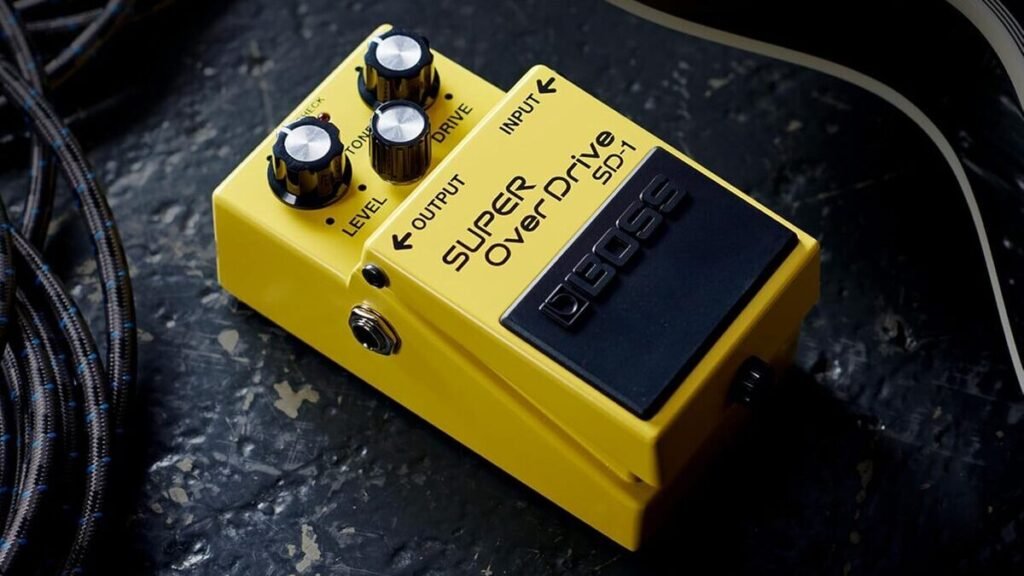
Boss started with the OD-1 in 1977. It was different from earlier pedals because of its soft clipping. The roland sd-1 came four years later, with a new design.
Boss added a tone control and improved the clipping. They used two diodes on one signal half and one on the other.
Why the SD-1 Remains a Best-Seller
Three reasons make the SD-1 a favorite:
- Affordable price under $60
- Reliable build quality
- Versatile vintage overdrive sound that works with any amp
The pedal’s asymmetrical clipping makes natural harmonics, like tube amp breakup. It’s great as a standalone overdrive or to boost amp preamps.
Understanding Asymmetrical Clipping Distortion Technology
The SD-1’s sound comes from its unique circuit. It uses a special diode setup that makes it different from other pedals. Unlike many, the SD-1 clips your guitar signal in a way that creates a warm tone.
How Asymmetrical Clipping Differs from Symmetrical
The SD-1 has two diodes on one side and one on the other. This uneven setup clips each wave peak differently. Most pedals, like the Ibanez Tube Screamer, clip equally on both sides. The SD-1’s asymmetrical clipping makes even-order harmonics that sound more musical.
The Science Behind the SD-1’s Warm Overdrive Sound
This pedal’s circuit design creates a tube-like warmth. The uneven clipping adds harmonics that mimic vacuum tubes. Your guitar signal gets shaped to keep note clarity while adding rich sustain. The op-amp design shares some DNA with the Tube Screamer but has its own unique sound.
🔥 Boss SD-1 Super Overdrive
Classic mid-range punch, smooth breakup, and perfect responsiveness — the SD-1 is your go-to pedal for rich overdrive without losing clarity.
See Current PriceComparing Boss Distortion vs Overdrive Circuits
Understanding boss distortion vs overdrive helps explain the SD-1’s role in the BOSS lineup. Distortion pedals like the DS-1 use hard clipping for aggressive tones. The SD-1’s overdrive circuit uses soft clipping for a smoother, more dynamic sound. This makes the SD-1 great for:
- Blues leads with singing sustain
- Boosting tube amps into natural breakup
- Adding warmth without losing note definition
Sound Character and Tonal Capabilities
The sd-1 distortion has a unique sound that stands out. It gives a warm, chewy tone that changes with how hard you play. When you play harder, it adds more harmonics, making it sound like a tube amp.
These Japanese pedals are known for staying clear at all gain levels. At low settings, they add a gentle boost that enriches your sound. Turn up the drive knob, and it becomes a lead machine with endless sustain.

- Smooth midrange push perfect for cutting through a mix
- Natural compression that evens out your playing
- Touch-sensitive response that cleans up with lighter picking
- Rich harmonic overtones without harsh fizz
Boss distortion effects are known for their consistency, and the SD-1 is no exception. It avoids harsh sounds that cheaper overdrives can make. It stays musical at every gain setting, making it great for both rhythm and solos. This is why the SD-1 is on many professional pedalboards, from small clubs to big stadiums.
⚡ Boss SD-1 Super Overdrive — A Must-Have Classic
Trusted by guitarists for four decades, the SD-1 delivers iconic overdrive tones that cut through any mix. Warm, responsive, and punchy — it’s one of the best-value pedals ever made.
⚡ Get Deal on AmazonReal-World Testing with Different Amplifiers
Testing the SD-1 with various amplifiers shows why it’s a top tube screamer alternative. It shines with each amp, showing its flexibility in tone. This pedal can fit into many musical styles.
Clean Fender-Style Amp Performance
Using the SD-1 with a Fender-style clean amp highlights its gain structure. It produces smooth distortion, avoiding harsh sounds. Even at high gain, the sound remains musical and controlled.

Orange OR15 Crunch Channel Results
When paired with an Orange OR15’s crunch channel, the SD-1 brings out clear midrange tones. It enhances the lower mids and tightens the bass. This combo gives a classic 1980s rock sound.
The Classic Marshall and SD-1 Combination
The SD-1 and Marshall amp combo is iconic. It produces tight bass and controlled feedback. Fans of Iron Maiden will instantly recognize these tones. The SD-1 adds sustain and compression, keeping the Marshall’s natural sound.
SD-1 vs Tube Screamer Alternative Options
The battle between the super overdrive pedal and Tube Screamer has shaped rock guitar for decades. Both pedals use op-amp circuits with soft clipping. But their differences create unique sonic signatures. The Tube Screamer hit the market in the late 1970s.
It brought its famous mid-bump and tight bass response. This became essential for rock and metal players.
When Boss launched the SD-1 pedal in 1981, they weren’t just copying the Tube Screamer formula. The SD-1’s asymmetrical clipping sets it apart from the Tube Screamer’s symmetrical design. This technical difference impacts your guitar tone shaping in several ways:
- The SD-1 produces a softer, more natural overdrive texture
- Asymmetrical clipping adds even-order harmonics for warmth
- The Tube Screamer delivers a tighter, more focused midrange push
- Both pedals cut bass frequencies but at different amounts

Many guitarists find the super overdrive pedal works better with already-distorted amps. Its looser, more open character complements amp saturation without making things muddy. The Tube Screamer excels at tightening loose amps and adding precision to palm-muted riffs.
Price plays a role too. The Roland SD-1 pedal typically costs less than most Tube Screamer variants. This makes it an attractive option for players wanting professional guitar tone shaping without breaking the bank. Both pedals boost mids and compress dynamics, but the SD-1’s unique voicing has earned its place alongside the Tube Screamer rather than beneath it.
Control Layout and Guitar Tone Shaping Features
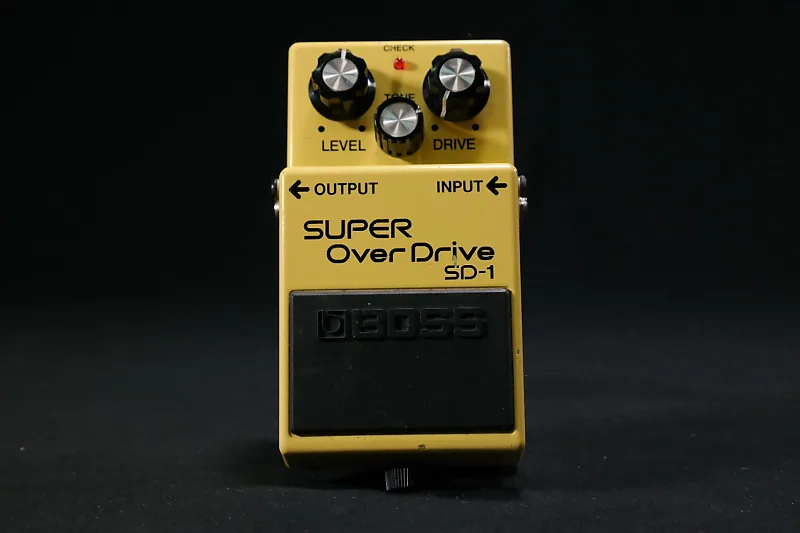
The SD-1 pedal has a simple three-knob design. It makes it easy to find your perfect blues rock overdrive sound. This analog overdrive pedal keeps the classic Boss guitar effects look. But, it also offers a wide range of tones thanks to its active circuitry.
Level, Tone, and Drive Controls Explained
The Level knob lets you adjust your volume without changing the overdrive sound. The Drive knob controls how hard your signal hits the clipping circuit. It goes from a gentle boost to a heavy lead tone.
The Tone knob lets you fine-tune the frequency. It doesn’t make big changes, helping you match your amp’s sound better.
Active EQ and Midrange Enhancement
The SD-1 uses an active EQ system, unlike old pedals. It can boost and cut specific frequencies at the same time. This boosts the midrange, making your guitar sound clearer and more defined.
This means your guitar and amp work together better. Your playing sounds more musical.
Finding Your Sweet Spot Settings
Begin with all knobs at noon for a balanced sound. For rhythm, set Drive to 9-11 o’clock and Tone a bit lower. Lead players might want Drive at 1-2 o’clock and Tone up for more cut.
These Boss guitar effects change with how you play and your guitar’s volume.
⏰ Last Chance to Grab the Boss SD-1
The Boss SD-1 is selling fast — and for good reason. Its iconic warm overdrive and unbeatable price make it one of the most reliable tone-shapers ever made. Don’t wait: availability and pricing can change at any moment.
🛒 Buy Now — Limited StockIdeal Applications for Blues Rock Overdrive
The Boss SD-1 is great for many musical settings. It’s perfect for practice at home or in professional studios. Its sound is clear and warm, making it stand out in band mixes.
The pedal’s unique design adds depth to blues solos and rock rhythms. This makes it a favorite among guitarists.
Studio Recording Applications
Recording engineers love the SD-1 for its consistent sound and low noise. It adds just the right amount of distortion to clean tracks. This makes guitar tracks richer and more interesting.
It’s easy to get the same sound every time. This is a big plus for producers.
Live Performance Benefits
On stage, the Boss SD-1 is reliable and boosts tone instantly. Its sound cuts through loud music well. It’s great for solos and can be turned off for cleaner parts.
The bright yellow color makes it easy to see on dark stages. This is a big help for performers.
Genre-Specific Uses and Famous Players
Blues players use it to get a natural, compressed sound. Rock guitarists use it for solos. Metal players add it to high-gain amps for a tighter sound.
Zakk Wylde uses multiple SD-1s for his unique sound. Josh Homme adds grit to Queens of the Stone Age tracks with it. At $65, it’s a great value for all musicians.
Conclusion
The Boss SD-1 guitar pedal is a classic example of a design that hit the mark from the start. It has been a favorite for over 40 years, proving its value on pedalboards around the world. Its unique asymmetrical clipping circuit produces a warm, natural overdrive that suits any amplifier.
At just $65, it offers professional sound quality without the high cost. This pedal is known for its versatility. You can use it for a subtle boost in blues solos or for heavy rock tones.
It responds well to your playing and your guitar’s volume. Studio engineers appreciate it for adding a controlled grit to clean tracks. Live performers rely on its durability night after night.
Players like Zakk Wylde, Josh Homme, and Johnny Greenwood have all used it, showing its versatility across different genres.
The SD-1 is a great choice for both beginners and professionals. Its simple design with three knobs makes it easy to get great sounds fast. The active EQ section helps your guitar stand out in any mix.
Whether you play in small clubs or big venues, this pedal delivers consistent quality every time you use it.
Read Also our Beginner’s Guide to Guitar Effects