Disclosure This post contains affiliate links. As an Amazon Associate, I earn from qualifying purchases at no extra cost to you.
Rock music has shaped the sound of electric guitars for decades. The right guitar brand can make a real difference in your tone and playing style. Finding the best electric guitar for rock means understanding what separates a good guitar from a great one.
The top electric guitar brands for rock include Fender, Gibson, PRS, Ibanez, Schecter, and EVH, each offering distinct sounds and features that have defined rock music. We’ll walk through specific models from these brands and explain what makes them stand out. We’ll also cover what to look for when choosing a guitar that matches your rock style.
1) Fender Stratocaster

When we think about rock guitar, the Fender Stratocaster always comes to mind. This guitar has been a favorite since 1946 and continues to be one of the most popular choices today.
The Strat was built to improve on the Telecaster. It features three single-coil pickups, a lighter body, and a tremolo system. These changes made it more comfortable and gave players more options for their sound.
We love how versatile this guitar is. Whether we’re playing rock, blues, funk, or jazz, the Stratocaster delivers. The bright, clear tone from those single-coil pickups cuts through any mix.
Another great thing about the Strat is how easy it is to customize. We can swap out pickups, adjust the electronics, and make it our own. The guitar is also simple to maintain, which saves us time and money.
Fender offers many Stratocaster models at different price points. Both Fender and their Squier line provide options for every budget. From beginner models to Custom Shop editions, there’s a Strat for everyone.
2) Gibson Les Paul Standard
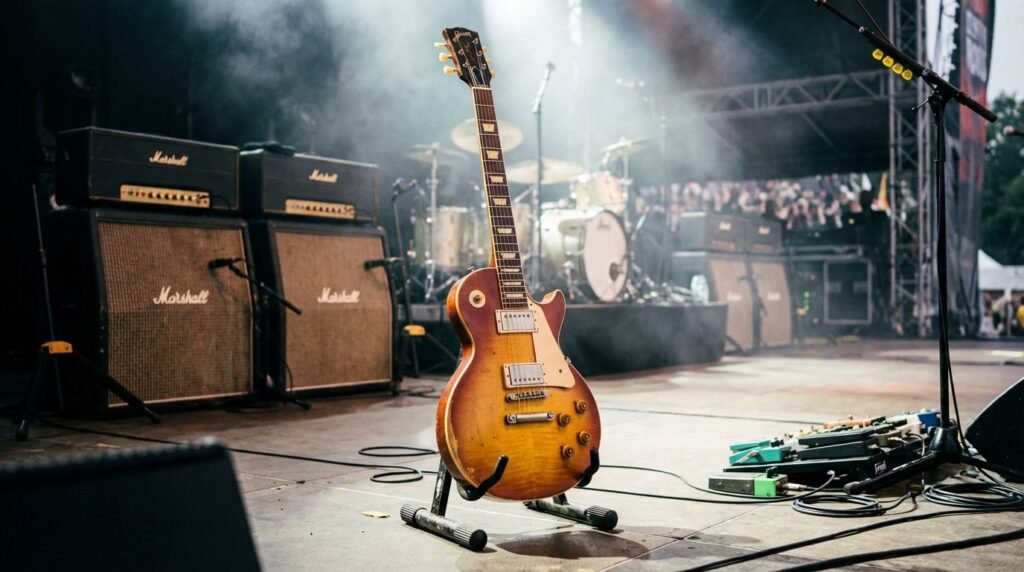
The Gibson Les Paul Standard has been a rock icon since it first appeared in 1952. We’ve seen it in the hands of legends like Jimmy Page, Slash, and Gary Moore for good reason.
This guitar delivers the warm, thick tone that rock players love. The solid mahogany body with a maple top gives it incredible sustain and that classic sound we hear on countless rock records.
What makes the Les Paul Standard special is its versatility. We can dial in everything from smooth blues tones to heavy distorted riffs. The dual humbucker pickups handle any style of rock music we throw at them.
The guitar feels substantial in our hands. It’s heavier than some other models, but that weight contributes to its rich sound. The neck has a comfortable feel that works well for both rhythm playing and lead work.
We won’t lie – the Les Paul Standard comes with a higher price tag than many guitars. But we’re getting authentic Gibson craftsmanship and a guitar that can last a lifetime. It’s an investment that serious rock players should consider.
3) PRS Custom 24
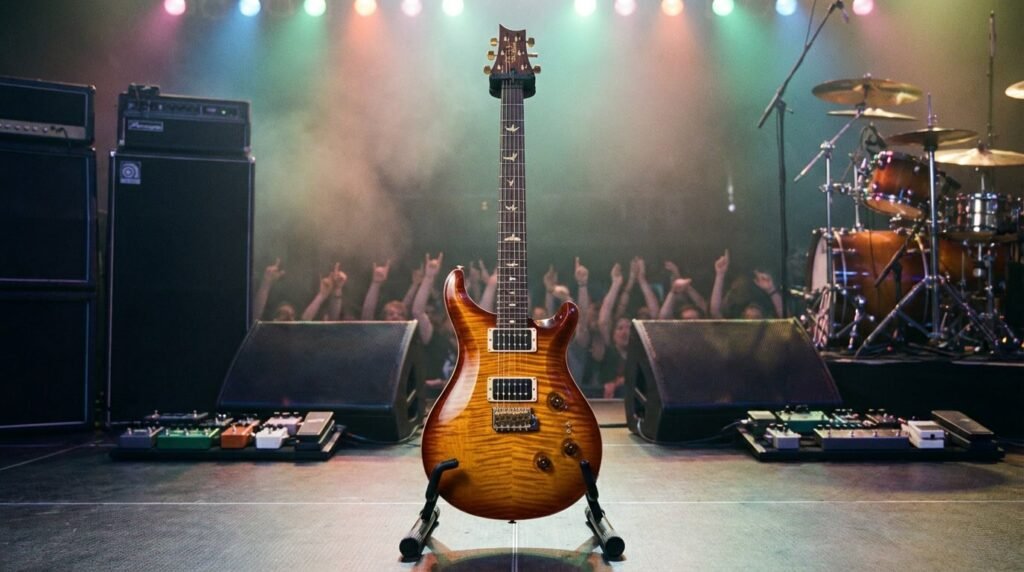
The PRS Custom 24 is the guitar that put Paul Reed Smith on the map back in 1985. It’s still their most popular model today, and for good reason.
This guitar sits right in the sweet spot between Gibson and Fender. It features a 25-inch scale length that splits the difference between the two classic brands. The body pairs a figured maple top with mahogany, which gives you great resonance and sustain.
What we love most is how versatile this guitar is. You can play rock, blues, jazz, or pop without switching instruments. The 5-way blade switch and volume and tone controls give you plenty of tonal options to work with.
The Custom 24 comes with 24 frets, so you get that full range for lead work. PRS also makes an SE version that’s more budget-friendly while keeping the quality high. Both versions feature those iconic bird inlays that PRS is known for.
World-class guitarists trust this instrument for studio work and live performances. It’s built to deliver right out of the case without needing a lot of setup work.
4) Ibanez RG Series

When we think about guitars built for rock and metal, the Ibanez RG series always comes to mind. These guitars first hit the market in 1987 and quickly became favorites among hard rock players.
The RG series started as a spinoff of Steve Vai’s JEM series. What makes these guitars special is their design focused on speed and comfort. They feature a thin neck that makes it easy to move around the fretboard quickly.
We love that RG guitars come standard with 24 frets and a deep cutaway. This gives us access to higher notes that other guitars can’t reach as easily. The flat fingerboard also helps when playing fast lead lines.
The body shape looks similar to a Stratocaster but with sharper, pointier edges. This gives RG guitars their aggressive look that matches their sound perfectly.
Today, we can find RG models at almost any price point. Entry-level versions use budget-friendly materials, while higher-end models feature premium components and Japanese craftsmanship. This makes the RG series accessible whether we’re just starting out or looking for a professional instrument.
5) Schecter Hellraiser
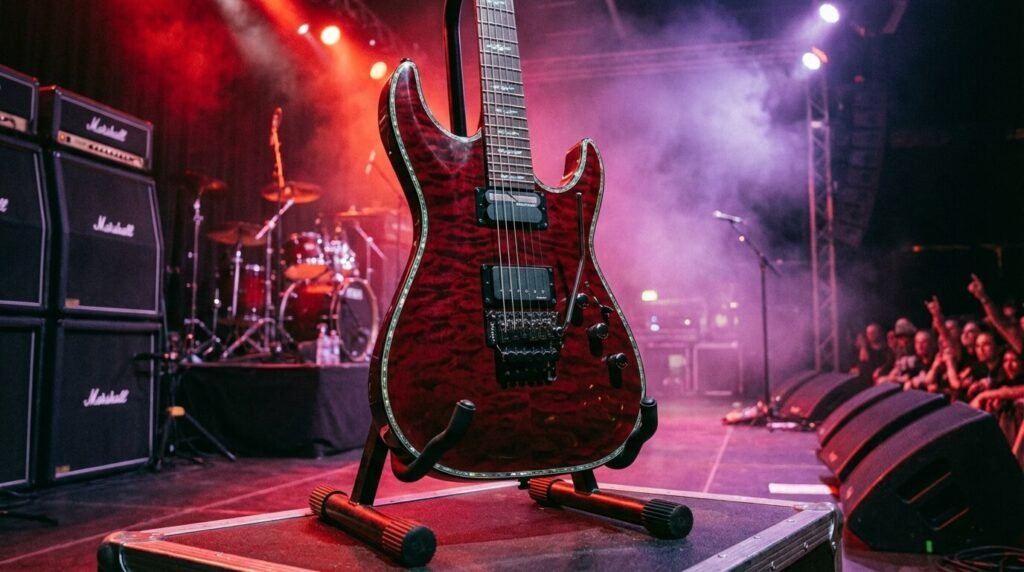
When we think about guitars built for rock, the Schecter Hellraiser series consistently comes to mind. These instruments are designed with metal and hard rock players in mind, but they work well across different rock styles.
The Hellraiser C-1 stands out with its mahogany body and set neck construction. This combination gives us excellent sustain and tonal clarity. The quilted maple top adds visual appeal while the mahogany delivers warmth and depth to our sound.
We appreciate the EMG active humbucking pickups that come standard on these guitars. They provide the hot output and tight response we need for heavier playing styles. The coil-splitting feature gives us more tonal options when we want them.
The setup quality on Hellraisers is impressive right out of the box. Many players notice how well these guitars play immediately, which saves us time and money on additional setup work.
Gothic cross inlays and black hardware give the Hellraiser its distinctive look. The 24 extra jumbo frets and Thin C neck profile make it comfortable for lead playing and extended techniques.
For rock guitarists who want a reliable instrument that can handle aggressive playing, the Schecter Hellraiser delivers solid performance at a reasonable price point.
6) EVH Wolfgang

The EVH Wolfgang stands out as one of the most respected guitars in rock music. Eddie Van Halen designed this instrument with his company EVH, which is now owned by Fender. He named it after his son, Wolfgang Van Halen.
We appreciate how this guitar evolved over the years. Eddie worked with multiple companies including Ernie Ball Music Man, Peavey, and eventually Fender to refine the Wolfgang design. Each version improved on the last through constant updates and changes.
The Wolfgang offers features that rock guitarists need. It includes an EVH-branded Floyd Rose tremolo system with Eddie’s patented D-Tuna for quick Drop D tuning. The pickups deliver powerful tones perfect for hard rock and heavy music.
We like that EVH Wolfgangs now come at different price points. Fender makes them in the USA, Mexico, and Indonesia. The Standard line uses Asian manufacturing, which brings the cost down for players on a budget.
The guitar’s balanced design and fast playability make it great for rock. Whether you want the high-end USA models or the more affordable Standard versions, the Wolfgang delivers solid performance.
What Sets Rock-Focused Electric Guitar Brands Apart?
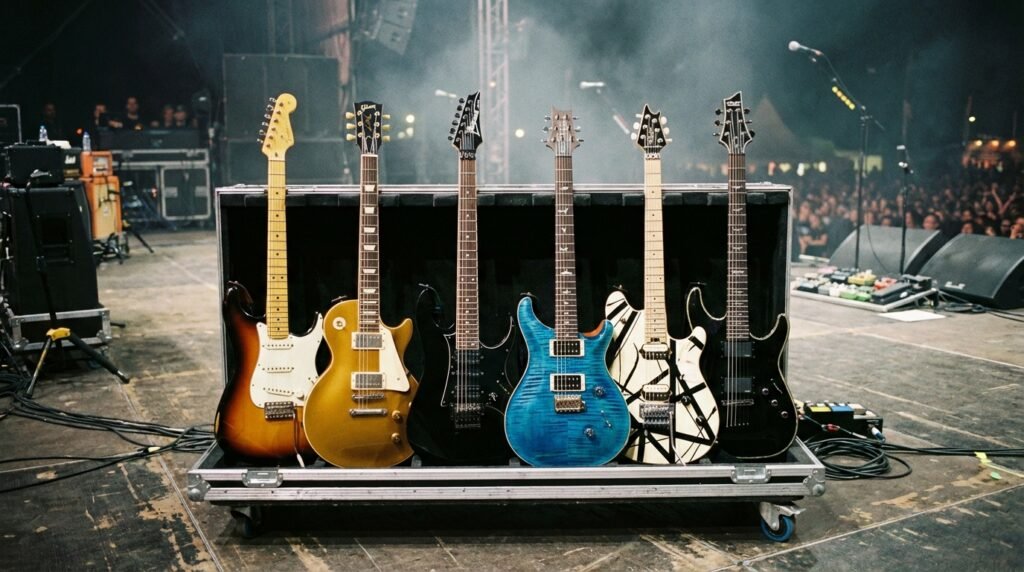
Rock guitars need thick, powerful tones that can cut through heavy drums and bass while handling high gain without excessive noise. The right woods, pickups, and hardware create guitars built to withstand aggressive playing styles and deliver the punch rock music demands.
Signature Sound Qualities
Rock-oriented guitar brands focus on delivering fat, aggressive tones with strong mid-range presence. These guitars use higher output pickups that push amplifiers harder and create natural overdrive. Humbucking pickups are the standard choice because they produce thicker sounds and cancel out unwanted hum when using distortion.
The tone woods matter too. Mahogany bodies give us warm, thick tones with strong sustain that work perfectly for heavy riffs. Maple tops add brightness and clarity to keep notes defined even with heavy distortion.
We find that rock guitars typically have shorter scale lengths around 24.75 inches. This creates a warmer tone and makes string bending easier. The combination of these elements creates the powerful, sustained notes that define rock guitar sounds.
Build Materials and Craftsmanship
Rock guitars use durable materials that can handle intense playing sessions and regular gigging. Solid body construction from mahogany or ash provides the mass needed for sustain and resonance. Set-neck or neck-through designs increase stability and improve note sustain compared to bolt-on necks.
The hardware needs to be robust. We see heavy-duty bridge systems, often tune-o-matic style bridges with stop-bar tailpieces that maximize string contact and energy transfer. Locking tuners keep guitars in tune during aggressive playing and frequent string bends.
Quality rock guitars feature thicker neck profiles that provide more wood mass for better tone. The fretboard radius is usually flatter to allow lower action without fret buzz during big bends.
Popular Features for Rock Players
Most rock guitars come with 24 frets to access higher notes for solos and leads. Coil-splitting options on humbuckers let us switch to single-coil tones when we need brighter, snappier sounds.
Volume and tone controls are positioned for quick adjustments during performance. Three-way pickup selectors give us instant access to neck, bridge, or both pickups together.
We appreciate features like:
- Thicker gauge strings (10-46 or higher) for fuller tone
- Graphs fretboard inlays for easy position marking during fast playing
- Contoured body cuts for comfort during long sessions
- Multiple pickup configurations for tonal variety
Floyd Rose or similar tremolo systems appear on rock guitars designed for dive bombs and extreme vibrato effects.
How to Select the Right Brand for Your Rock Style

Your experience level and preferred rock subgenre directly shape which guitar brand will serve you best. Budget constraints and tonal needs also play key roles in making the right choice.
Considerations for Beginners vs. Experienced Players
When you’re just starting out, we recommend focusing on brands that offer solid quality without breaking the bank. Squier (made by Fender) and Epiphone (made by Gibson) provide beginner-friendly options that sound good and play well. These guitars typically cost between $200 and $500.
You’ll want to look for guitars with comfortable neck shapes and lighter bodies. Brands like Yamaha and Ibanez make excellent starter models with slim necks that are easier to play for hours.
As an experienced player, your needs change completely. You might want specific pickup configurations or premium tonewoods. Fender, Gibson, PRS, and ESP offer professional-grade instruments with the build quality and tonal characteristics that matter for recording and live performance.
We suggest trying guitars in person before buying. Your playing style and hand size affect which brand feels right to you.
Versatility Across Rock Subgenres
Different rock styles need different guitar characteristics. Fender Stratocasters work great for classic rock, blues rock, and indie rock because of their bright, clear tone. The three single-coil pickups give you that crisp sound you hear in bands like The Rolling Stones.
For heavier styles like hard rock and metal, Gibson Les Pauls or ESP guitars deliver the thick, powerful tone you need. Their humbucker pickups reduce noise and provide more output for distorted sounds.
If you play multiple rock subgenres, we recommend brands like PRS or Ibanez. PRS guitars often include coil-splitting options that let you switch between humbucker and single-coil sounds. Ibanez makes models that handle everything from punk to progressive metal.
Jackson and Schecter specialize in metal but can handle other rock styles too. Their fast necks and hot pickups suit aggressive playing across heavy rock subgenres.