Guitar strings don’t last forever, and knowing when to swap them out can make a huge difference in how your instrument sounds and plays. Most guitarists should change their strings every 100 hours of playing or every three months, whichever comes first. I’ve learned that this simple rule helps keep my guitar sounding bright and playing smoothly.
When to change guitar strings? The truth is that worn-out strings can ruin even the best guitar’s tone. They go dull, fall out of tune easily, and sometimes break at the worst possible moments. I used to wonder why my guitar sounded flat even after adjusting my amp settings, and it turned out my strings were just past their prime.

Ernie Ball Regular Slinky – Coated Titanium
Tired of breaking strings or losing that “new string” brightness? The **Ernie Ball Titanium Coated** strings combine the classic Slinky feel with a micro-thin coating and titanium reinforcement at the ball end. They stay in tune longer, resist rust, and handle heavy bending without snapping.
Shop on AmazonIn this guide, I’ll walk you through the clear signs that tell you it’s time for fresh strings. I’ll also share what affects string lifespan and answer common questions that come up when you’re trying to figure out your own string-changing schedule.
How to Know When to Change Guitar Strings

I’ve learned that guitar strings show clear warning signs when they need replacing. Fresh strings deliver bright tone and smooth playability, while worn strings create problems with sound quality, tuning stability, and feel.
Visual and Physical Signs of Worn-Out Strings
I always start by looking at my strings closely. Old strings develop visible discoloration, turning dark or rusty where my fingers press most often. This happens because sweat, oils, and dirt from my hands build up over time.
When I run my fingers along the strings, worn ones feel rough or bumpy instead of smooth. I can often see and feel flat spots where the strings contact the frets. These indentations indicate the string has lost its round shape.
Corrosion appears as brown or black spots on the strings. Sometimes I notice a gritty or sticky texture under my fingers when playing. If the strings look grimy or have visible gunk between the windings, that’s a clear sign they need replacing.
The ball ends and windings can also show wear. I check for fraying or unraveling at the bridge or headstock. Any of these visual signs mean I should put on fresh strings soon.
Sound and Tuning Issues Associated with Old Strings
When my guitar strings get old, the first thing I notice is dull or lifeless sound. Fresh strings ring out with brightness and sustain, but worn strings lose that clarity. Notes don’t project as well and the overall tone becomes flat or muddy.
Tuning problems become more common with old strings. I find myself retuning constantly during practice or performances. The strings struggle to hold their pitch, especially after bending notes or playing for a while.
Old guitar strings lose their resonance and warmth. Even after I tune up, the guitar just doesn’t sound the way it should. The strings may feel dead when I play them, lacking the responsive feel of new ones.
If my guitar sounds off no matter how much I adjust the tuning, it’s probably time to change guitar strings. This is especially true if the intonation seems wrong up and down the neck.
Typical Timeframes for Changing Strings
I change my strings based on how often I play. For daily players, fresh strings every 2-4 weeks keeps tone and playability at their best. If I play a few times per week, I aim for every 1-2 months.
Casual players who pick up the guitar occasionally can stretch it to every 3 months. However, strings deteriorate even when not played due to humidity and air exposure. I never let them sit longer than 6 months, even on guitars I rarely use.
Professional musicians and performers often change guitar strings before every show or recording session. This guarantees the best possible sound quality when it matters most.
Quick Reference Guide:
- Daily players: Every 2-4 weeks
- Regular players (3-4x week): Every 1-2 months
- Casual players: Every 2-3 months
- Occasional players: Every 3-6 months maximum
String Breakage and Playability Concerns
A broken string is the most obvious sign that I need to change guitar strings. While I can replace just one broken string, I prefer changing the whole set. This keeps the tone balanced since all strings age at the same rate.
Playability suffers when strings get old. My fingers have to work harder to press down notes, and bending strings becomes more difficult. Old strings can feel uncomfortable or even painful to play, especially during longer practice sessions.
I’ve noticed that worn strings make fretting notes less precise. The flat spots and roughness interfere with proper finger placement and intonation. This makes playing in tune more challenging, particularly up the neck.
If my guitar feels harder to play than usual or my fingers hurt more than normal, fresh strings often solve the problem. The smooth, round surface of new strings makes playing easier and more enjoyable.
Ernie Ball Regular Slinky – Coated Titanium
Tired of breaking strings or losing that “new string” brightness? The **Ernie Ball Titanium Coated** strings combine the classic Slinky feel with a micro-thin coating and titanium reinforcement at the ball end. They stay in tune longer, resist rust, and handle heavy bending without snapping.
Shop on AmazonFactors That Affect How Often You Should Change Guitar Strings
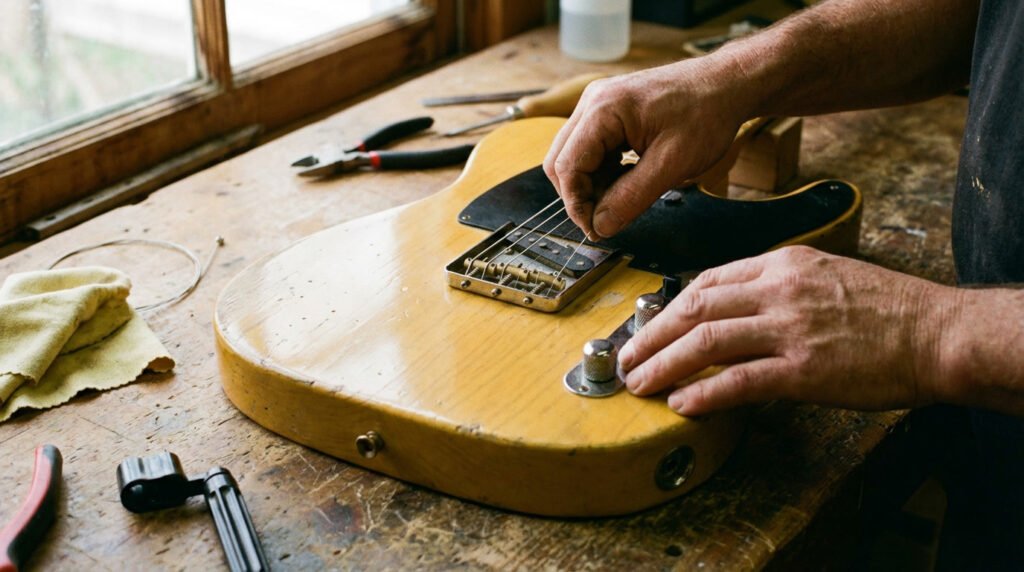
String lifespan isn’t the same for everyone. How often you play, what type of strings you use, and how you care for them all play a role in when you’ll need fresh strings.
Impact of Playing Frequency and Style
I’ve noticed that how much I play my guitar makes the biggest difference in string life. If I’m playing daily, my strings wear out much faster than when I only pick up my guitar once or twice a week.
Playing style matters too. When I do aggressive strumming or lots of string bending, I wear down my strings quickly. The oils and sweat from my fingers also transfer to the strings during long practice sessions. This buildup makes strings lose their bright sound and feel sticky under my fingers.
Daily players often need new strings every 1-2 weeks. If I play 3-5 times per week, I typically change mine every 4-6 weeks. Casual players who only practice 1-2 times weekly can usually wait 2-3 months between changes.
Influence of String Type and String Gauges
Different strings last different amounts of time based on their material and construction. I’ve found that string gauges affect both tone and durability. Lighter gauges (like .009 or .010) feel easier to play but tend to break more easily. Heavier string gauges (like .012 or .013) last longer but require more finger strength.
The material matters too. Nickel-plated steel strings are common for electric guitars and offer good tone. Bronze and phosphor bronze strings work well for acoustics. Stainless steel strings resist corrosion better but can feel stiffer under my fingers.
Benefits of Coated Strings and Proper Maintenance
Coated strings have changed how often I need to restring my guitars. These strings have a thin polymer coating that protects against dirt, oils, and moisture. I’ve found they can last 3-4 times longer than uncoated strings.
The tradeoff is that coated strings cost more upfront. But since they last longer, I actually save money over time. Some players say coated strings sound slightly duller than uncoated ones, though newer coating technology has improved this.
Simple maintenance extends any string’s life. I wipe down my strings with a clean cloth after each playing session. Washing my hands before playing helps too. Storing my guitar in its case protects the strings from dust and humidity that cause faster wear.
Ernie Ball Regular Slinky – Coated Titanium
Tired of breaking strings or losing that “new string” brightness? The **Ernie Ball Titanium Coated** strings combine the classic Slinky feel with a micro-thin coating and titanium reinforcement at the ball end. They stay in tune longer, resist rust, and handle heavy bending without snapping.
Shop on AmazonFrequently Asked Questions

Guitar players often have similar questions about string maintenance and replacement timing. I’ve gathered the most common concerns about recognizing worn strings, understanding their lifespan, and knowing what you need to change them yourself.
How do I tell if my guitar strings need changing?
You can identify worn strings by checking for visible dirt, rust, or discoloration. New strings have a shiny appearance and even coloring, while old ones look dull and grimy.
Run your finger along the underside of the strings. If they feel rough or you notice small flat spots where they contact the frets, it’s time for new ones.
Listen to how your guitar sounds. Strings that need replacing sound lifeless and dull, with less sustain than fresh strings. You’ll also notice they’re harder to keep in tune and may sound out of tune when you play notes higher up the neck.
What’s the lifespan of electric guitar strings with regular use?
I recommend changing electric guitar strings every 3 months or after about 100 hours of playing time, whichever comes first. This timeline can vary based on your body chemistry and playing habits.
Players with more acidic sweat will wear through strings faster than others. The environment matters too, since high humidity speeds up corrosion.
If you play daily or perform regularly, you might need to change strings every few weeks. Professional musicians often replace their strings weekly or even daily to maintain the best possible tone.
Can acoustic guitar strings wear out even if I don’t play often?
Acoustic guitar strings can degrade from exposure to moisture in the air, even when you’re not playing. Humidity causes oxidation, which leads to tarnishing and eventually rust.
Strings in opened packages are more vulnerable to this process. If your guitar has been sitting unplayed for months, the strings have likely corroded from atmospheric moisture alone.
You should change the strings on a guitar that’s been in storage, even if they weren’t used much. Store your guitar in its case when not playing to provide some protection against humidity damage.
What are the signs that my classical guitar strings should be replaced?
Classical guitar strings show similar wear signs as other types. Look for discoloration, loss of brightness in tone, and difficulty staying in tune.
Nylon strings can develop a sticky or rough texture when they’re worn. They may also feel stiff and less responsive under your fingers.
The wound bass strings on classical guitars will show visible dirt buildup and may have the winding come loose in spots. If you see any fraying or separation of the windings, replace the strings immediately.
What tools do I require to change the strings on my guitar myself?
You only need a few basic tools to change guitar strings yourself. A string winder speeds up the process of removing old strings and winding new ones onto the tuning pegs.
Wire cutters help trim excess string length after installation. A soft cloth is useful for cleaning your fretboard while the strings are off.
The actual string change process takes about 25 minutes once you’ve practiced a few times. No special skills or expensive equipment are required.
Do unused guitar strings degrade over time, and should I replace them?
Guitar strings can last for many years when kept sealed in their original airtight packaging. Store them in a cool, dark place for best results.
Once you open the package, the strings begin to corrode from exposure to moisture in the air. I recommend storing opened strings in an airtight container or bag to slow this process.
If the original packaging was damaged or not airtight, the strings may already show signs of corrosion. Check for discoloration or rough texture before installing older strings on your guitar.